Why did Excel Dental Center 4914 Thoroughbred Ln Brentwood TN-Reconsidered the Patient Experience—From the Front Door Forward?
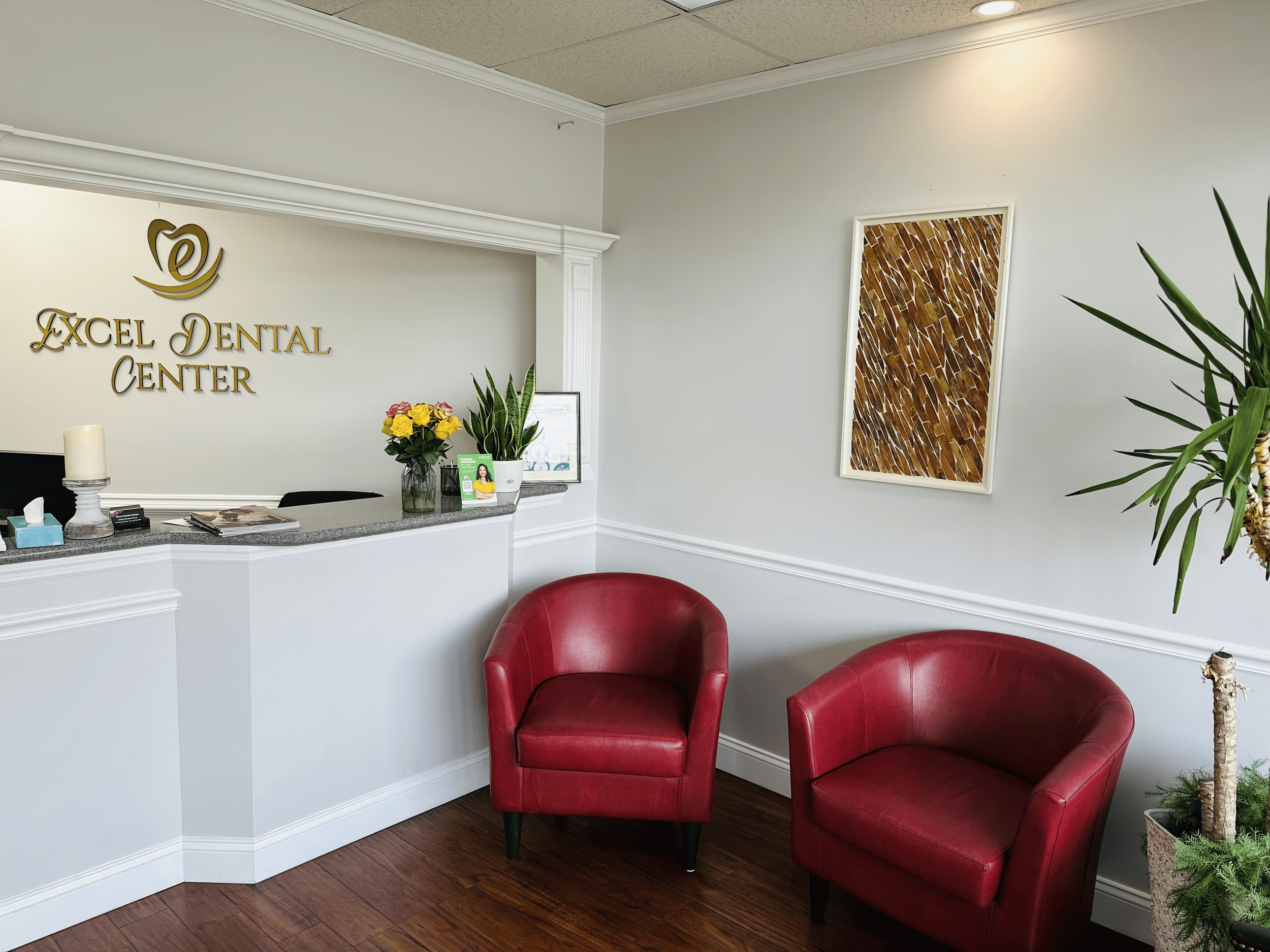
A large cabinet in the Northwest was removed to allow the office to receive more qi and opportunity
How a Brentwood dental practice used classical feng shui to support healing, comfort, clarity, and continuity of care
By Brad Crane, White Crane Feng Shui
At Excel Dental Center in Brentwood, Tennessee, patient care is not limited to what happens in the dental chair.
The practice’s approach to dentistry is centered on understanding the individual patient, listening carefully, explaining treatment clearly, and helping people make informed decisions about their dental health.
That philosophy led the practice to consider a broader question:
Does the office environment itself support the same healing, care, clarity, and attention that patients receive during treatment?
The dentist explained the motivation behind the project:
“I have always wanted to create a comfortable and friendly environment for our patients. We treat our patients like family.”
To explore that question, Excel Dental Center invited me to evaluate the practice through classical feng shui.
The consultation examined the surrounding landforms, roads, water movement, building orientation, entrance, reception, internal circulation, treatment-room use, work positions, and the practical journey patients experience from arrival through treatment and follow-up.
The purpose was not to decorate the office with symbolic objects.
It was to understand how the physical environment could more intentionally support the people already receiving excellent professional care inside it.
A dentist who turned intention into action
Many businesses commission reports, discuss improvements, and then postpone implementation.
Excel Dental Center did something different.
Within approximately one month, the dentist implemented the agreed changes, followed the instructions carefully, and completed the work with an expert eye for detail.
She did not treat the recommendations as a generic checklist.
She considered how each modification would function within a real dental practice: how patients would enter, where they would sit, how staff would move, where treatment would occur, how supplies would be organized, and how the completed office would feel as a whole.
That level of implementation revealed something important about her character as a dentist.
She was willing to examine details that many patients might never consciously identify because she understood that care is communicated through more than procedures. It is also communicated through preparation, organization, attentiveness, consistency, and the willingness to improve an already functioning practice.
By the time of our final walkthrough, the recommendations had not simply been placed in the office. They had been thoughtfully integrated into it.
How an office environment can support healing
Feng shui does not perform dental treatment, replace clinical judgment, or guarantee medical outcomes.
It can, however, help support the conditions surrounding healing.
A patient may enter a dental office experiencing pain, apprehension, uncertainty, embarrassment, financial concern, or unanswered questions. The clinical work remains the responsibility of trained dental professionals, but the environment can influence whether the experience feels disorienting or coherent, obstructed or open, hurried or settled.
An environment designed to support healing should help patients:
arrive and orient themselves comfortably,
feel appreciated rather than processed,
move through the office with more clarity & less unnecessary confusion,
understand what is happening and what comes next,
experience treatment in a space appropriate for sustained care,
and leave with clarity about the continuation of that care.
Healing in this context is therefore larger than a single procedure.
It includes the patient’s physical treatment, emotional experience, understanding, trust, continuity, and ability to participate in the next step of the care process.
Opening the path of arrival
One of the important physical changes involved removing a large cabinet from the West/Northwest portion of the office.
In the feng shui analysis, this area was connected to the incoming movement of qi. The cabinet created unnecessary weight and obstruction near that intake path.
Its removal helped make the area more open, and less compressed.
From the patient’s perspective, this supports a more coherent arrival experience. A person entering the practice should not immediately encounter an environment that feels blocked, or crowded.
The objective was not emptiness for its own sake. It was to give the incoming movement room to breathe while preserving the professionalism and functionality of the office.
Creating stability
A substantial, organized shelf was placed in the Northeast corner as a stabilizing and containing feature to support healing.

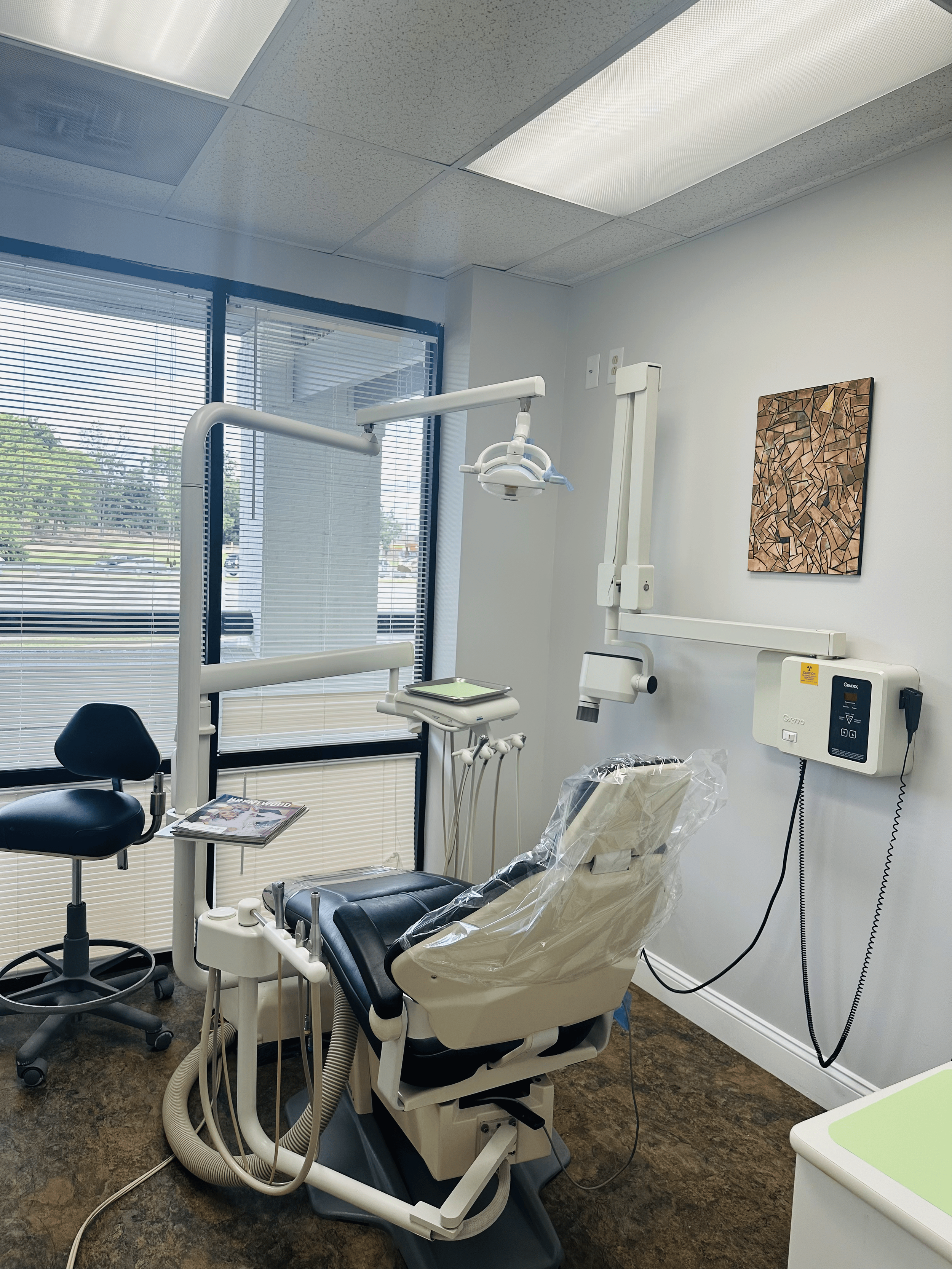
In the Northeast, substantial organized storage and carefully selected artwork were used to create containment and stability
This was not intended to become miscellaneous storage or decorative overflow. Its purpose was to introduce structure, visual weight, and deliberate organization in an area where movement needed to be slowed and contained.
Used thoughtfully, the shelf could support patient education materials, professional information, carefully arranged supplies, or credibility items without creating visual chaos.
This matters to the patient experience because information and organization can become part of care.
A patient who is trying to understand a condition or treatment recommendation may benefit from an environment that communicates preparation and order.
The completed feature therefore supports two connected objectives:
· environmental stability and patient understanding.
· Using treatment rooms more intentionally
The consultation also examined whether every treatment room should be used in exactly the same way.
The answer was no.
Some rooms were better suited to shorter appointments, initial visits, or limited functions. Other areas were more appropriate for longer procedures, consequential treatment conversations, or situations requiring greater stability and sustained attention.
The Northeast treatment room was therefore assigned more selectively, while the stronger central treatment area could be used more strategically for longer, more sensitive, or more important work when practical.
This was not about declaring one room universally “good” and another universally “bad.”
It was about matching the function of the room with the environmental qualities identified through the analysis.
A treatment room should do more than hold equipment. It should support the relationship between the patient, dentist, staff, and procedure taking place inside it.
What the practice began to notice
After completing the changes, the dentist observed a broader difference in the atmosphere:
“Overall, our team and patients seemed more comfortable and relaxed, even when they did not comment on specific details. A couple of patients especially liked the copper-framed artwork.”
This should be understood accurately.
It was not a formal patient survey, nor does it prove that feng shui directly produced a medical or psychological outcome. It was the dentist’s observation of how people appeared to experience the completed environment.
The specific comments about the artwork provide a smaller but more concrete point of feedback: some patients noticed and appreciated details that had been carefully incorporated into the office.
Patients do not need to identify every environmental modification.
They may simply experience a practice that feels more deliberate, comfortable, organized, and professionally cared for.
That subtle experience is often more important than creating a dramatic visual display.
A personal workspace that supports authority leadership, planning, and clinical judgment
The most specific change the Doctor noticed involved relocating her personal workspace.
The original office position was in the Southeast. The Flying Star analysis indicated that this area could support ideas, education, marketing, and planning, but was less suited to functioning as the primary command center of the practice.
The West and adjoining central area were stronger for leadership, administration, professional judgment, refined communication, clinical decision-making, financial clarity, patient trust, and administrative control.
After making the change, she explained:
“Changing my personal workspace was the most interesting change I noticed. I am supervising tasks with more authority.”
This is one of the strongest statements in the case study because it describes a specific experience associated with a specific recommendation.
It should not be exaggerated into proof of universal cause and effect. However, her observation closely corresponds with the intended purpose of the new position.
The consultation did not create her authority or professional expertise.
It helped place her leadership activity in an area intended to support the authority, clarity, settled attention, and professional judgment she already possessed.
That has a direct patient benefit.
Patients rely not only on the procedure performed during an appointment, but also on:
careful case review,
coordinated treatment planning,
clear staff direction,
consistent communication,
organized scheduling,
and reliable follow-through.
When leadership is more settled and confident, the entire patient-care system can become more coherent.
Trust before treatment
During our final walkthrough, the Doctor clarified that Excel Dental Center was already clearly communicating treatment needs and, whenever possible, arranging follow-up before the patient left the office.
That clarification matters.
The consultation did not teach the practice to begin caring about trust or follow-through. It recognized why those existing strengths were especially important within the property’s environmental pattern.
Her philosophy can be expressed this way:
“We work to establish trust before addressing a patient’s dental needs so that care feels less stressful.”
Trust is not a decorative feature.
It develops through listening, explanation, reassurance, diagnosis, understandable options, financial clarity, and a clearly defined next step.
That process directly reflected the San He diagnosis.
Quieting sensitive areas
The East portion of the office contained a sensitive Flying Star combination and was therefore treated with quiet Metal support rather than increased activity.
This recommendation fit naturally within a dental environment. Stainless-steel instruments, refined metal objects, professional containers, and carefully chosen metallic elements could perform the feng shui function without making the space feel theatrical or out of character.
The intention was to calm and control the area, not stimulate it.
From the patient’s perspective, this contributes to a clinical environment that feels organized, deliberate, and professional.
Not every part of a healthcare office needs more activity. Some areas benefit from quietness, order, and reduced visual stimulation.
The practice was already supporting continuity of care
One important clarification emerged during our final walkthrough.
The report emphasized the importance of clearly explaining treatment and, when possible, helping patients establish a defined next step before leaving the office.
The dentist explained that this was already part of her patient-care process. She was already communicating treatment needs clearly and arranging follow-up appointments whenever possible before the patient departed.
That distinction strengthens the case study.
The feng shui consultation did not introduce patient care or persuade the dentist to begin following up with people. Instead, the environmental analysis recognized the importance of a process that the practice was already performing.
The physical recommendations were therefore designed to bring the office into closer alignment with an existing professional strength.
The dentist was already guiding patients from diagnosis toward the continuation of care. The goal was to make the environment support that same progression.
Landform and Water Comes First
The analysis began outside the office.
Classical feng shui first considers the broader environment: the land, roads, approach, movement of water, orientation, and the way qi enters and leaves a property.
Using a San He landform classification method, the site was identified as a Wood Environment.
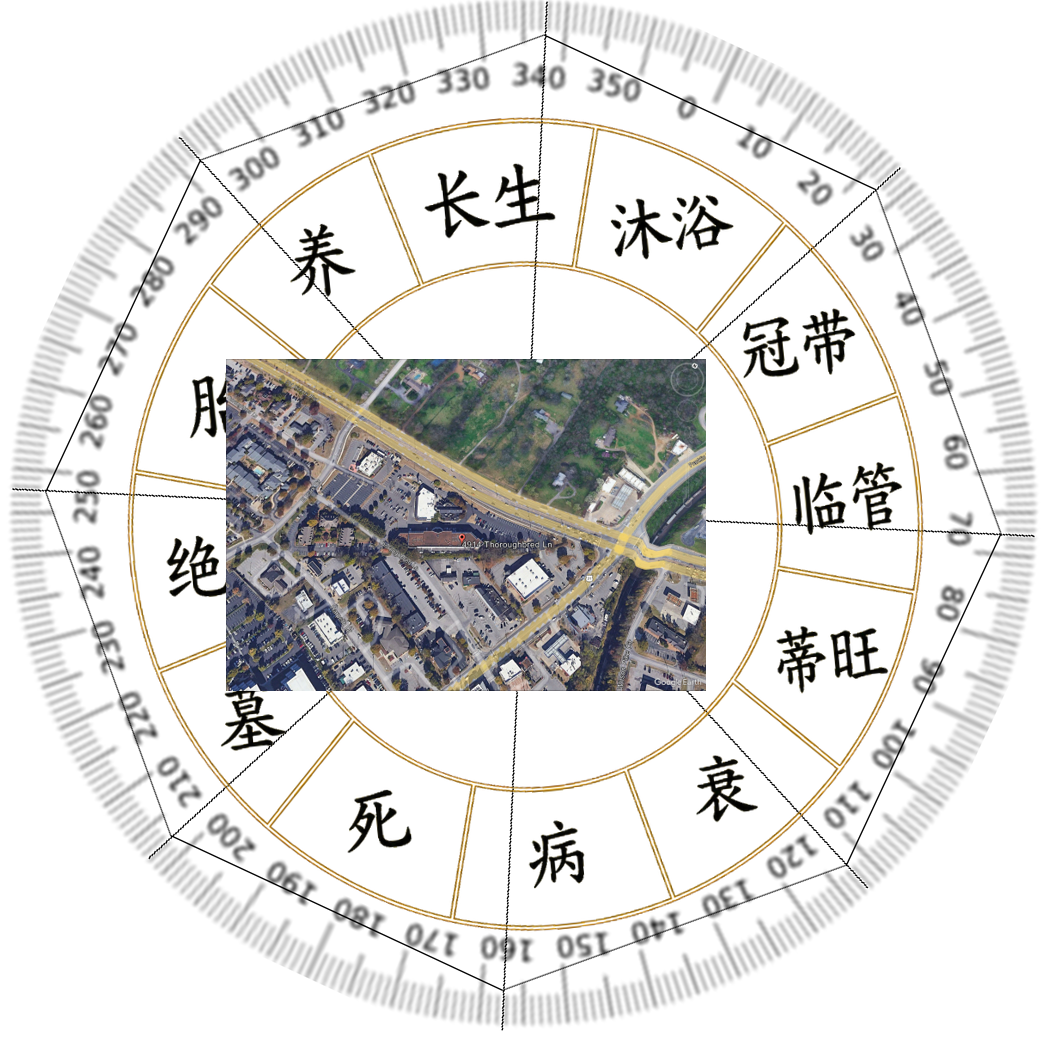
The water drainage and road movement entered from Old Hickory Blvd W2 You, corresponding to the Embryo phase, and exited through E1 Jia near Franklin Pike and the railroad tracks, corresponding to the Peak phase.
In classical terms, Embryo qi is young, developing, and not yet fully formed. Peak qi is mature, active, and valuable.
Translated into the patient experience, this suggested that people could enter the practice while still developing their understanding and readiness.
A patient may arrive with a question, a problem, fear of treatment, uncertainty about cost, or only a partial understanding of what is needed. The environment and patient-care process must then help nurture that early-stage movement through reassurance, diagnosis, explanation, treatment planning, and a clear next step.
The Peak-phase exit emphasized the importance of continuity. Mature understanding and momentum should not simply leave the office without direction.
That does not mean pressuring patients into treatment. It means ensuring that they understand their options and are clear about how to continue caring for their health.
Flying Star refined the interior
After the external landform and San He pattern were established, I applied Flying Star Feng Shui to the office’s interior layout. Using my feng shui compass, called a luopan, determined the office had a N3 Gui Period 8, flying star chart.
This system adds time-and-use layer to the analysis. It helped refine how different sectors and rooms could be used after the larger movement of the property was understood.
Within Flying Star Feng Shui , there are two main types of energy classification called “stars”.
Mountain Stars are traditionally associated with the more settled and human side of a building: people, health, stability, relationships, concentration, and sustained occupancy.
Water Stars relate more closely to movement, communication, circulation, activity, and commercial flow.
That distinction was especially useful in a dental practice.
Reception and circulation require movement. Treatment, consultation, case review, and clinical planning require greater steadiness.
The chart identified the West’s 1–6 combination as supportive of authority, administration, professional intelligence, and refined decision-making. The South’s 8–8 combination was treated as an area of stability and accumulated value when used appropriately. More sensitive combinations in the East, Northeast, and Northwest required quieter use, reduced obstruction, containment, or corrective Metal.
The Flying Star analysis did not replace the San He reading.
San He explained how qi entered, developed, and left the broader site. Flying Star helped determine how the internal rooms could support the people and activities within that movement.
Confidence in the completed environment
Ashley summarized the collaborative result simply:
“Following the recommendations gave us more confidence in accomplishing our goal.”
That goal was not merely to make the office look different.
Subtle changes, carefully completed
The finished office was not designed to announce that feng shui had been used.
There was no need to fill it with unfamiliar symbols or create a themed environment.
The strongest changes were functional and often subtle:
an obstruction was removed,
an area of movement was opened,
a stabilizing feature was added,
room use became more intentional,
leadership functions were relocated,
sensitive areas were quieted,
and the relationship between patient care and office organization became clearer.
Patients may not enter Excel Dental Center and identify each modification individually.
They may simply experience an office that feels more organized, heartfelt, stable, and attentive.
That is the difference between adding decoration and applying environmental intelligence.
What the implementation says about Excel Dental Center
The most compelling part of this case study is not any single object or directional measurement.
It is the dentist’s response to the information.
She completed the agreed changes within approximately one month. She followed the recommendations carefully. She applied her own professional eye to their implementation. She considered how they would affect patients, staff, treatment, organization, and the overall character of the practice.
That willingness to act demonstrates:
precision,
responsiveness,
discipline,
professional curiosity,
attention to detail,
and genuine concern for the people she serves.
Many healthcare providers care deeply about their patients.
Excel Dental Center demonstrated that care by examining not only the treatment being delivered, but also the environment through which patients approach, receive, understand, heal and continue that treatment.
Care from the front door forward
Feng Shui and the physical office cannot replace the healing work performed by a qualified dentist.
It can support that work meaningfully.
It can make arrival clearer, help important clients feel more settled, support professional planning, reduce unnecessary obstruction, strengthen patient education, and reinforce healing and continuity between one appointment and the next.
The consultation revealed that Excel Dental Center’s patient-centered philosophy was already present in the dentist’s communication and follow-up.
The implementation extended that philosophy into the environment.
From the entrance to reception, from consultation to treatment, and from checkout to the next stage of care, the office itself is being treated as part of the patient experience.
The guiding principle is simple:
Care should not begin when the procedure starts. It should be reflected in how the entire practice creates an environment that receives, supports, treats, informs, and follows up with the patient—from the front door forward.
To learn more or request an appointment:
For a classical feng shui business or residential consultation in Nashville, Brentwood, or Middle Tennessee:
If you enjoyed this article and want to read more about local Nashville TN consultations check out these articles:
https://whitecranefengshui.com/current-events/university-school-of-nashville-unlock-harmony